
Trade Practices in the Vijayanagara Empire
This document summarizes historically verified trade best practices followed during the Vijayanagara Empire (14th–16th centuries), based on archaeology, inscriptions, traveller accounts, and academic research.
Specialized and Regulated Market Zones
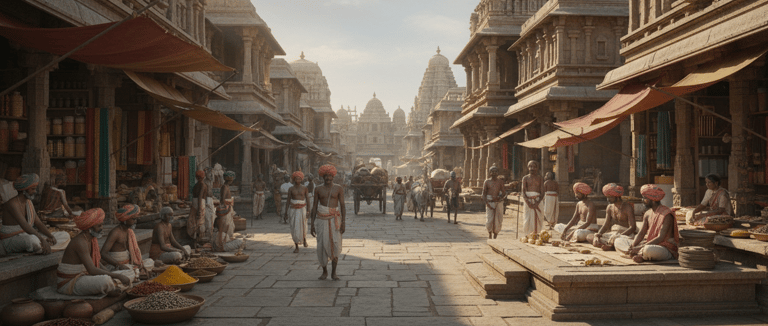
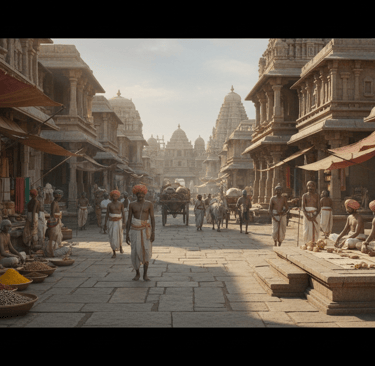
Markets were organized by commodity—gems, textiles, horses, spices—especially in the capital, Hampi. The Virupaksha Bazaar (also called Pedda Angadi) is a well-documented example.
Why it mattered: Easier inspection, fair pricing, and efficient taxation.
Sources: - Archaeological Survey of India – Hampi Group of Monuments
https://asi.nic.in/pages/WorldHeritageHampi.aspx - John M. Fritz & George Michell, The Royal Centre at Vijayanagara
https://www.jstor.org/stable/24047026
Strong Role of Trade Guilds (Śreṇīs)
Merchant and craft guilds regulated quality, pricing norms, training, and dispute resolution. Guilds often interacted directly with royal officials.
Why it mattered: Self-regulation reduced fraud and ensured continuity of standards.
Sources: - Burton Stein, Peasant State and Society in Medieval South India
https://archive.org/details/peasantstatesoci0000stei - K.A. Nilakanta Sastri, History of South India
https://archive.org/search?query=hampi
Written Records on Palm Leaves and Copper Plates
Daily transactions were recorded on palm leaves, while permanent grants and legal acts were inscribed on copper plates or stone.
Why it mattered: Created legal proof and audit trails.
Sources: - National Mission for Manuscripts (Palm-leaf records)
https://www.namami.gov.in/ - South Indian Copper Plate Inscriptions (ASI)
https://asi.nic.in/epigraphical-survey/copper-plates/
Written Records on Palm Leaves and Copper Plates
Daily transactions were recorded on palm leaves, while permanent grants and legal acts were inscribed on copper plates or stone.
Why it mattered: Created legal proof and audit trails.
Sources: - National Mission for Manuscripts (Palm-leaf records)
https://www.namami.gov.in/ - South Indian Copper Plate Inscriptions (ASI)
https://asi.nic.in/epigraphical-survey/copper-plates/
Sunka (Customs) Office and Treasury Reporting
Sunka officers inspected goods, assessed tax, and sent official records to the Royal Treasury. Merchants did not report directly to the treasury.
Why it mattered: Separation of roles ensured transparency and reduced manipulation.
Sources: - K.A. Nilakanta Sastri, The Vijayanagar Empire
https://archive.org/details/vijayanagarempir0000sast - Epigraphia Indica (Revenue and customs records)
https://asi.nic.in/epigraphical-survey/epigraphia-indica/
Secure Payment Methods and Escorts
Large payments were made using sealed pouches of coins or bullion, often escorted by guards. Receipts were issued on palm leaves with official seals.
Why it mattered: Ensured safety and accountability in high-value trade.
Sources: - Domingo Paes & Fernão Nunes accounts (translated excerpts)
https://archive.org/stream/in.ernet.dli.2015.220366/2015.220366.The-Vijayanagar_djvu.txt
Dispute Resolution and Consumer Protection
Disputes were resolved by guild councils, market elders, or royal officials, depending on the scale of the issue.
Why it mattered: Predictable justice encouraged commerce and trust.
Sources: - Burton Stein, Vijayanagara (administration & economy chapters)
https://archive.org/details/vijayanagara0000stei
International Trade Regulation
Foreign merchants (Arab, Persian, Portuguese) operated under royal licenses, paid customs duties, and enjoyed protection.
Why it mattered: Attracted global trade and wealth to the empire.
Sources: - Robert Sewell, A Forgotten Empire
https://archive.org/details/forgottenempire00robe
Temples as Financial Institutions
Temples acted as treasuries, employers, and sometimes lenders. They maintained detailed financial records.
Why it mattered: Temples were trusted custodians of wealth and credit.
Sources: - George Michell, Architecture and Art of Southern India
https://archive.org/details/architecturearto0000mich
Watch these videos
To get a deeper insight on the inner working of the trade system in Vijayanagara era

